How is a gas pipe through a wall fire stopped?
- Every seal labelled and photographed
- BM TRADA / FIRAS-certificated contractors
- Written price before any work
Gas pipes in flats are usually steel or copper. They do not melt like plastic, so they do not need a collar. They conduct heat, and they need to be able to move a little, so the seal round them has to allow for both.
Where a gas pipe passes through a wall it is normally run inside a sleeve, a short length of larger pipe set into the wall. The sleeve protects the gas pipe and lets it move. The gas pipe, the sleeve and any change to them are work for a Gas Safe registered engineer.
The fire stopping is in two places.
Round the outside of the sleeve, where it meets the wall or floor. This is sealed like any other metal pipe penetration: mineral wool packed in and intumescent or fire-rated mastic over it, to the depth the data sheet sets, using a product tested for that pipe size and material.
Between the gas pipe and the sleeve. This gap is sealed at one end with a suitable non-setting fire-rated sealant, so the pipe can still move. Again, the product has to be one tested and approved for that use.
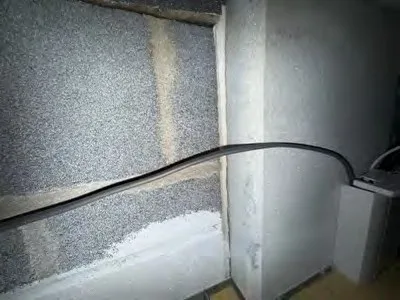
The common problems we would expect in an old meter cupboard or riser: a gas pipe in a rough hole with no sleeve, a sleeve with nothing between it and the wall, or expanding foam squirted round the whole lot. Foam round a gas pipe is the wrong answer on both counts.
If a pipe has no sleeve, or the pipe itself looks corroded or damaged, we note it for a Gas Safe engineer before any seal goes on.
Fire stopping work we have done includes a gas meter cupboard in a block of flats.
Send the postcode, what the building is and a photo of the gap. We will tell you what it needs and give you a rough price.