Fire stopping in Swiss Cottage
Tall blocks, and an area that saw a big fire safety evacuation in 2017.
- Every seal labelled and photographed
- BM TRADA / FIRAS-certificated contractors
- Written price before any work
In June 2017, days after the Grenfell Tower fire, Camden Council evacuated four tower blocks on the Chalcots Estate in Swiss Cottage after fire safety concerns were raised. Residents were out of their homes for weeks while work was done. The cladding got most of the attention, but the problems reported also included things inside the blocks, such as fire doors and insulation round gas pipes.
Swiss Cottage still has many tall blocks: estate towers, newer private flats along Finchley Road and round the station, and older mansion blocks.
What fire stopping covers in a tower
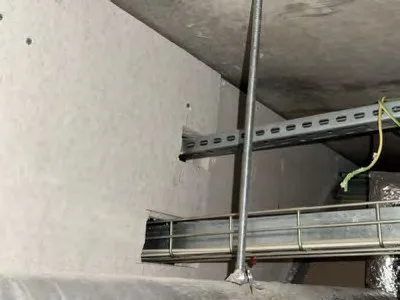
Each floor slab in a riser must be sealed where pipes and cables pass through. In a twenty-storey block, one missing seal lets smoke from one floor into the next, and several missing seals let it climb.
The walls between each flat and the lobby must be sealed where services enter the flat: door entry, aerial, fire alarm, heating pipes from a communal system.
Gas pipes rising through the building, where a block still has gas, need their seals checked at every floor.
Refuse chutes, lift motor rooms and plant rooms.
Higher-risk buildings
Blocks 18 metres or more, or seven storeys and up, with at least two homes, are higher-risk buildings under the Building Safety Act. Their owners must register them and keep information about the building, and a full schedule of fire stopping is part of knowing what is in the walls and floors.
Starting point
A compartmentation survey of every riser and lobby. The sealing that follows is carried out by our BM TRADA / FIRAS-certificated contractors.
Send the postcode, what the building is and a photo of the gap. We will tell you what it needs and give you a rough price.